Exploring education, culture and sustainability with the NEA Foundation Global Learning Fellows


Exploring education, culture and sustainability: A journey through Costa Rica with NEA Foundation Global Learning Fellows Mollie Bousu, Hannah Johnson and Nichole Markworth
Written by Mollie Bousu, Hannah Johnson and Nichole Markworth. Edited by Heaven Keane.
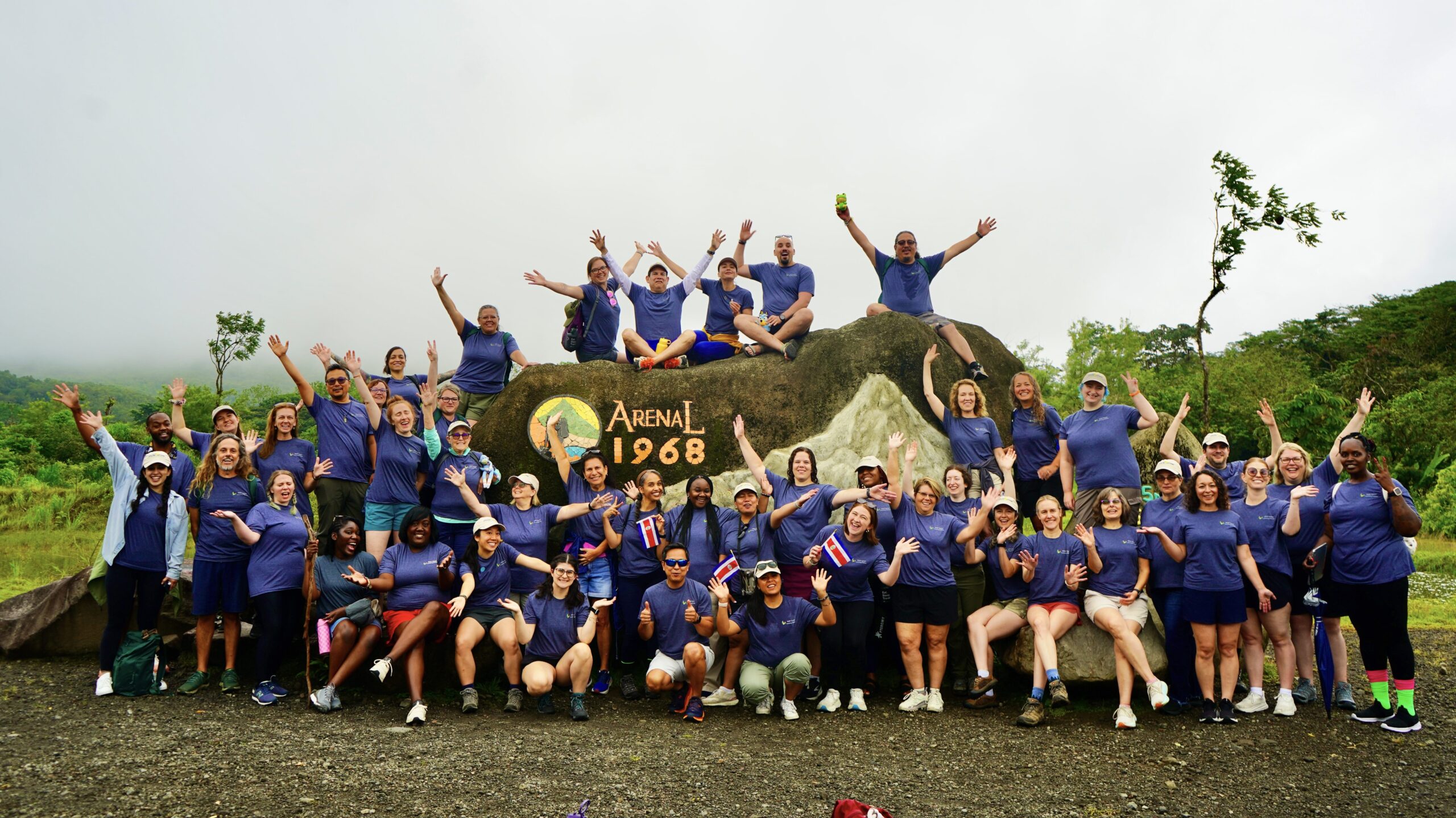
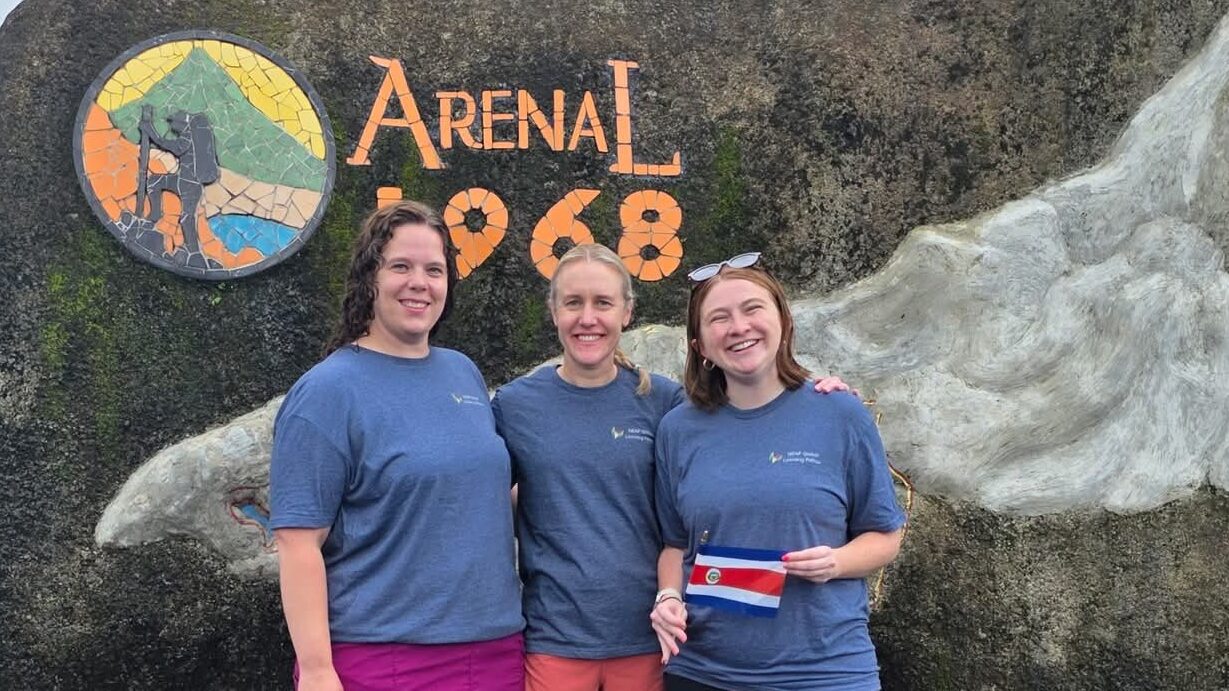
Each year, the NEA Foundation’s Global Learning Fellowship program provides in-depth opportunities for select educators to transform their classrooms to give students a global perspective so that they can thrive in an increasingly connected world. This year’s cohort of 46 educators included three teachers from Minnesota: Mollie Bousu, social studies teacher in Burnsville; Hannah Johnson, fourth grade teacher in Osseo; and Nichole Markworth, K-6 music teacher for Lac qui Parle Valley Schools.
Throughout the past year, the trio met with a small cohort to develop lesson plans and a website centered around quality education, which is one of the United Nations Sustainable Development Goals (SDGs). In addition to their cohort meetings, all of the fellows met via Zoom several times over the course of the year. Through these meetings, fellowship participants “develop the knowledge and skills to integrate global competency into their daily classroom instruction [and] advocate for global competency in their schools and districts,” according to the NEA Foundation Global Learning Fellowship website.
Fellows spent the back half of June in Costa Rica for an immersive field study. From the heart of San José to the serene Guanacaste coast, they engaged deeply with Costa Rican culture, sustainability practices and learning about the nation’s education system. The experience was transformative, offering opportunities to reflect, learn and collaborate in a global context.
On day two, the group kicked off their cultural immersion with a guided tour of San José, exploring landmarks such as the National Theater, National Museum and Mercado Central (Central Market). Day three brought the first school visit to Colegio Técnico Profesional de Puriscal, a secondary school with a technical and vocational focus in the San José province. Students attend school from 7 a.m. to 4 p.m. at this school. Once they are in upper high school, students choose a track they wish to join. Students work and learn within these tracks, which include options such as executive, tourism, agriculture, artificial intelligence and more. Many students have jobs, internships or a university lined up after graduation.
Even without all the resources we are accustomed to in the U.S., the students were very happy and appeared to be enjoying themselves throughout our visit. The students had smiles the entire day and were genuinely excited to be at school and engaging with the fellows. The day ended with a visit to the University for Peace (UPEACE), which was established by the United Nations to promote peace education. The fellows attended a workshop hosted by Rey Sirakavit on peace building and sustainable development, where they learned about Costa Rica:
- The country officially disbanded the military in 1948 and redirected a large portion of this spending to education.
- It is ranked as one of the happiest countries in the world.
- Costa Rica provides universal education and health care.
- 35% of the country is set aside as protected land.
- 98% of Costa Rica’s energy consumption comes from renewable energy.
- The country is home to one of the world’s five blue zones, which are areas where people live significantly longer and healthier lives than average.
There were several meaningful quotes that stuck out to the trio of Minnesota fellows. One such quote is from activist Malala Yousafzai: “The only way we can create global peace is through not only educating our minds, but our hearts and our souls.”
Another memorable quote is from Kofi Annan, former secretary-general of the United Nations: “Education is, quite simply, peace building by another name. It is the most effective form of defense spending there is.”
Day four brought a visit to the historic city of Cartago, visiting the Basílica de Nuestra Señora de los Ángeles. After a traditional Costa Rican lunch, they journeyed to Irazú Volcano National Park for a scenic hike around the country’s highest volcano. The evening included a compelling presentation by Costa Rican education researcher Jennyfer León Mena on Costa Rica’s education system. Participants learned several interesting facts about the country’s education system:
- Costa Rica has a 98% literacy rate.
- Eight percent of the nation’s GDP is constitutionally mandated to go towards education (for the U.S., it is approximately 5.4%).
- Nine out of 100 schools offer a full curriculum, defined as an all-day education that includes art, music and P.E.
- Costa Rican schools have split school days, where one group of students attends from 9 a.m. to 12:30 p.m., and another group attends from 12:30 p.m. to 4 p.m. Principals get extra pay because they are technically teaching in two schools.
- They have centralized hiring and salaries: Individual schools don’t pick who their teachers are.
- There are no substitute teachers except for maternity leave. If teachers are gone, they simply don’t have that class.
- There is no evaluation process for teachers.
- 40.8% of all Costa Rican students live in poverty.
On day five, the fellows visited two more schools. The first school, Escuela Educación Especial Fernando Centeno Güell, is a primary school in San José with a special education focus. The second school was Liceo San Nicolás de Tolentino, a high school with a general education focus. Fellows spent the day engaging directly with students and staff at each of the schools, discussing teaching practices, equity and student engagement.
The group then traveled north to the lush rainforest region of Arenal. They stopped at a family-owned coffee estate, Hacienda Doka, to learn about sustainable farming and sample a variety of coffee. That evening, the group soaked in the area’s natural hot springs before enjoying dinner.
The following day, the group hiked through Arenal Volcano National Park, observing wildlife and exploring hardened lava trails. Participants also toured the Don Juan farm—an organic farm where fellows harvested crops, learned about eco-friendly energy from biodigesters, participated in a sugar-cane harvesting demonstration and tasted traditional dishes.
En route to the Pacific coast, the group toured Palo Verde National Park by riverboat, spotting crocodiles, exotic birds and other wildlife. After a riverside lunch, they continued their journey to the stunning beaches of the Guanacaste region.
The final full day of exploration as a group took fellows to Santa Cruz, a hub of Costa Rican cultural traditions, and Guaitil, a village known for its indigenous Chorotega-style pottery. A hands-on workshop allowed them to create and understand centuries-old techniques of pottery making. The evening ended with a farewell dinner that celebrated new friendships, inspiration and the shared mission of educational equity.
After a life-changing journey, fellows returned home with fresh insights, stories, connections, life-long friendships, a renewed purpose to infuse their classrooms with global perspectives and a deeper commitment to sustainable development goals. They were reminded to think globally, act locally—essentially, to understand how our actions impact the entire world while taking specific steps to bring change at the local level.
In closing, the group wishes everyone pura vida! Pura vida, which means “pure life,” isn’t just a phrase—it’s a mindset of gratitude, joy and living fully in each moment. It’s a reminder that sometimes, the richest experiences come not from what we have, but from how we see the world.
We encourage all educators to consider applying for the NEA Foundation Global Learning Fellowship! While applications for the 2026 cohort are now closed, the opportunity will reopen this winter for the 2027 cohort.
For more information about the fellowship, visit https://www.neafoundation.org/educator-grants-and-fellowships/global-learning-fellowship.